

Mustard Oil and Seeds, Cultivation, India’s Leadership, and Regional Trade
Mustard carries a character no other oilseed shares, a sharply pungent oil tied to kitchen tradition and a seed whose trade orbits almost entirely around India. Following the crop from sowing through crushing to market reveals why this oilseed behaves so differently from the globally benchmarked commodities beside it.
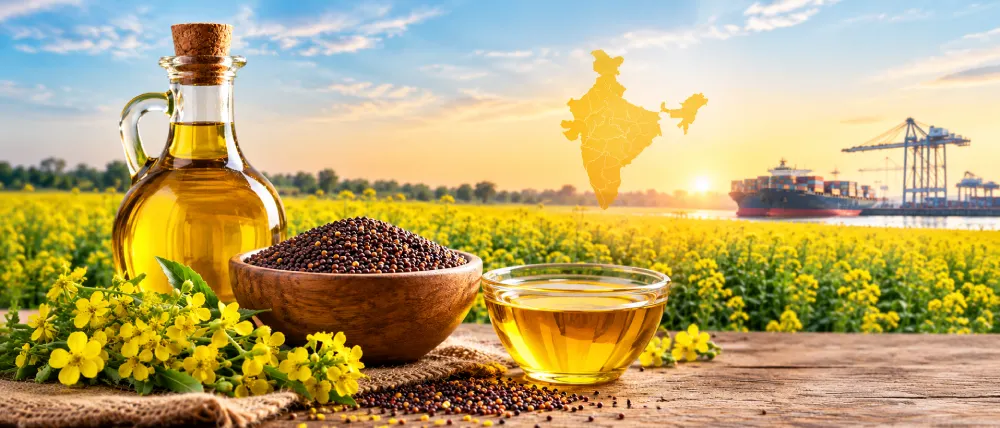
Sowing and Growing Mustard
Mustard grows as a rabi crop, sown after the monsoon recedes and harvested in spring. It favors cool temperatures during vegetative growth and leans on residual soil moisture, tying yields directly to monsoon performance months earlier. Across northern India, farmers sow the tiny seeds and manage aphids and white rust through the season. Its short duration and modest water needs make it a dependable fit where winter cropping options are scarce.
Pressing the Seed Into Pungent Oil
Mustard seed is crushed mainly by expeller pressing, a method that preserves the sharp aroma Indian cooking demands. The seed releases a golden, pungent oil carrying the compounds behind its signature bite, while the remaining mustard cake becomes feed and organic fertilizer, two products drawn from one small seed.
Where Mustard Oil Belongs
Mustard oil holds near-cultural status across northern and eastern India, used in cooking, pickling, and traditional applications. The same natural compounds that create its pungency also lend preservative qualities. This deep domestic demand keeps the crush running steadily, ensuring a continuous flow of seed, oil, and meal.
India at the Center of Supply
The Mustard Heartland
India leads global mustard production decisively, with Rajasthan, Uttar Pradesh, Haryana, and Madhya Pradesh forming the core belt. The crop feeds an oil industry woven into daily cooking, which is why India both grows and consumes most of what it produces.
Secondary Producers
Canada and Europe grow mustard, though much of their output flows into the related canola and rapeseed streams. Nepal, Bangladesh, and Russia add regional volumes serving local demand.
How Mustard Trades
NCDEX and the Physical Mandis
Mustard seed futures trade on India’s National Commodity and Derivatives Exchange, setting the reference the broader market follows. Alongside it, India’s physical mandis mirror real-time regional supply and demand.
Why Chicago Exchanges Skip It
CME Group exchanges, CBOT and COMEX, list globally standardized staples like soybeans, corn, and metals. Mustard lacks the international trade volume for such a contract, so traders seeking signals often watch competing canola and soybean oil futures instead.
The USDA's Supporting View
Though the U.S. Department of Agriculture doesn’t lead on mustard, a minor U.S. crop, its global oilseed reporting helps traders read the wider edible-oil and protein-meal environment that frames mustard pricing against rivals.
What Moves Mustard Prices
- Rabi harvest size and monsoon-driven soil moisture
- Household mustard oil demand across India
- Minimum Support Price and government procurement policy
- Competing oils, with soybean and canola setting the ceiling
- Rupee movements shaping export competitiveness
With one nation dominating supply, Indian weather and policy weigh heavily over the entire market.
Checking Reliable Figures
For accurate mustard seed and oil data, consult NCDEX, Indian market portals, and USDA oilseed reports.
Because mustard tracks harvest cycles and domestic oil demand, current regional data far outperforms any generic estimate.
Trading a Crop Rooted in One Nation
Mustard oil and seeds reward a regional mindset. Supply rises and falls with India’s rabi crop, prices surface on NCDEX rather than Chicago, and demand springs from a cooking tradition no substitute fully replaces. For buyers and traders tracking Indian harvests, policy signals, and the spread against competing oils, mustard offers opportunity in a market global exchanges overlook.
Related Articles
Soybean Oil and Seeds, From Field to Global Trade
Soybean feeds two of the largest commodity streams on earth, edible oil and protein meal, and both begin with a single seed. Tracing the crop